
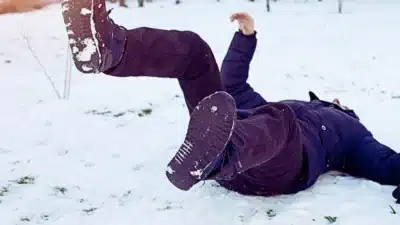
The winter fall risks in Chicago apartment buildings are serious and can result from landlords who neglect ice, snow, and maintenance duties. The dangers include black ice, waiting too long to remove snow or ice, and unclear maintenance rules.
A personal injury attorney can help if you have been hurt. Call Smoler Law Office in Chicago.
Common Winter Slip-and-Fall Hazards in Chicago Apartments
Common winter fall hazards include:
- Icy sidewalks and walkways: Sidewalks that are not shoveled or salted quickly accumulate ice. Even a thin layer of black ice can cause slippery sidewalk injuries that leave tenants with sprains, broken bones, or head injuries.
- Snow-packed entrances and steps: Front entrances, back doors, and stairwells can become dangerous when snow collects. Without ongoing clearing, packed snow becomes slippery and uneven.
- Untreated parking lots and driveways: Parking areas are prone to uneven freeze-thaw cycles. When landlords fail to maintain these areas, tenants may face slippery surfaces and the dangers of black ice.
- Poor lighting in outdoor areas: Dim lighting makes it harder to see ice patches. When combined with snow or freezing rain, low visibility increases the risk of serious personal injury.
- Water tracked indoors: Lobbies, hallways, and entry mats can become slick with snow and slush.
When these hazards lead to Chicago apartment slip and fall injuries, a tenant may have grounds to bring a personal injury case.
Landlord Responsibilities for Snow and Ice Removal
Chicago municipal code requires landlords to keep common areas reasonably safe. During winter, this means taking timely action to prevent snow and ice accumulation. For example, landlords should remove snow that falls between 7 a.m. and 7 p.m. before 10 p.m.
Landlords are typically responsible for shoveling and salting sidewalks, walkways, and building entrances, clearing stairways, ramps, and emergency exits, maintaining parking areas and driveways, fixing drainage issues that cause recurring ice patches, and providing adequate lighting in outdoor common areas. Tenants who become hurt can consult a premises liability lawyer to see if they have grounds for a lawsuit.
The fall risks in Chicago apartment buildings can result in serious injuries. Smoler Law Office can offer guidance on your next steps. Contact us today.
FAQs About Fall Risks in Chicago Apartment Buildings
Who is responsible for slip-and-fall injuries in Chicago apartment buildings?
Liability usually falls on the landlords or property owners if they neglected safety obligations.
What should tenants do immediately after a winter fall on property?
Take photos of the conditions, report the incident to the landlord, seek medical care, and contact a Chicago personal injury attorney if injuries are serious.
How can tenants prove a landlord was negligent in maintaining walkways?
Evidence such as photos, witness statements, maintenance logs, and weather records is helpful.